Fences Pool Fences

Pool Fencing Regulations in New Zealand

03 Aug 2026
Pool Fencing Regulations in New Zealand

Pool Fencing Regulations in New Zealand

A swimming pool is the ultimate addition to a Kiwi backyard, offering an architectural focal point for entertaining and a refreshing escape during hot New Zealand summers. However, owning a pool comes with strict legal responsibilities. In New Zealand, pool safety is tightly governed, meaning compliance isn’t just a recommendation; it is a legal mandate.

Every residential pool in New Zealand must comply with the Building Act 2004 (specifically Clause F9 of the NZ Building Code). These rules are designed to prevent unsupervised access by children under five years old.

Where other companies might see these codes as a hassle, at Warner we see them as our responsibility. With over 30 years of expertise, creating safe environments for families is a responsibility we take very seriously.

Our teams are nationwide and work closely with project managers, builders and regulatory bodies to ensure we are consistently engineering certified building code clause f9 solutions that eliminate the guesswork for homeowners.


How is pool compliance tested?

There are four major things that are assessed when pool fencing is inspected for compliance. These are all factors that contribute to child safety, and must be adhered to year-round, not just for the inspection.

  • Minimum Height: The pool barrier must stand at least 1.2 metres tall from the finished ground level outside the pool area.
  • Ground Clearance: The gap between the bottom of the fence and the ground cannot exceed 100mm.
  • No Climbable Zones: The outside of the fence must be a smooth surface free of horizontal rails or structures that a child could use as a foothold.
  • Vertical Gaps: For horizontal slat or tubular designs, the gap between vertical bars must not exceed 100mm to prevent a child from squeezing through.


What styles of pool fencing are safest?

Compliance does not mean sacrificing your home’s street appeal. When investing in a premium pool fence installation, NZ homeowners trust our locally made products are not only visually appealing, but also are excellent safety solutions.

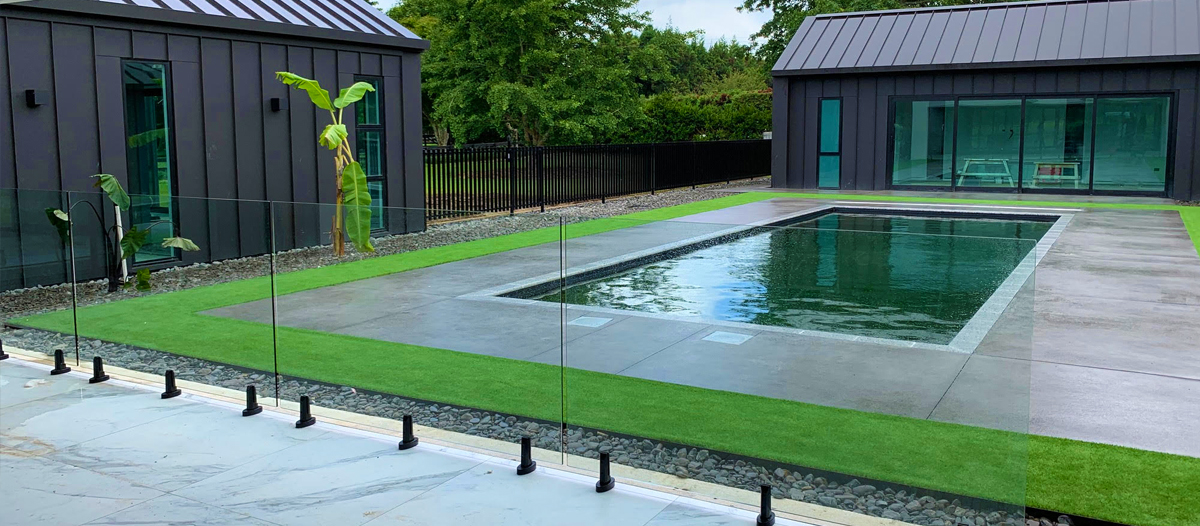
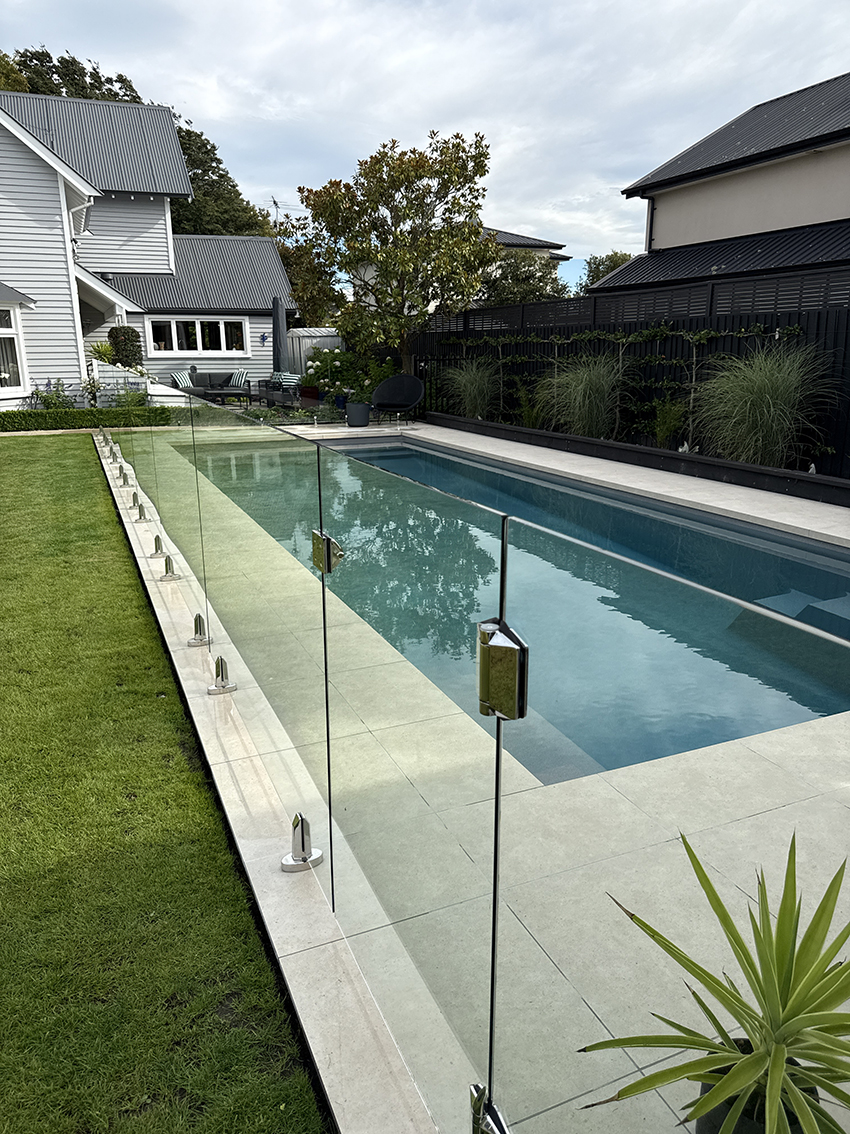
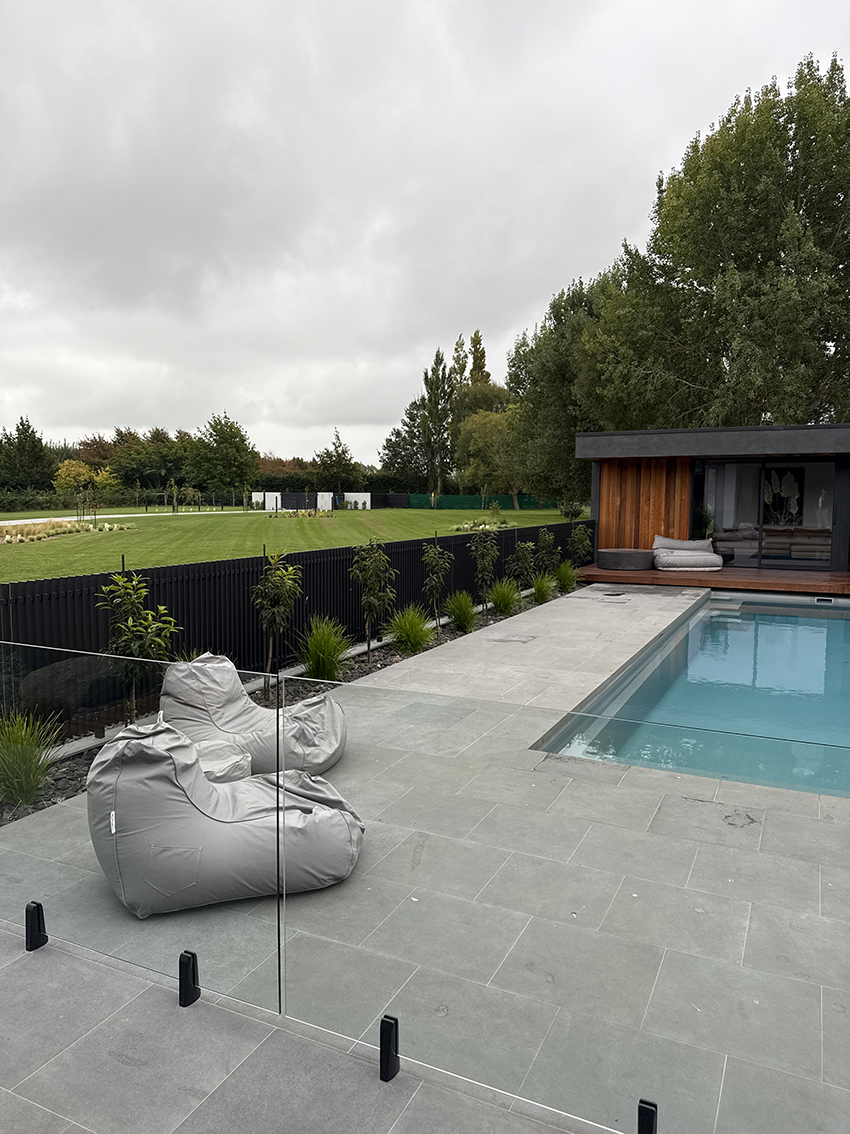
Typically, pool fencing comes down to spigot and glass panels, or tubular aluminium. While the aluminium look can vary greatly, depending on extrusions and styles selected, the glass panels are relatively consistent in style. Increasingly, homeowners are opting for a mixture of glass and tubular styles around different areas of the pool.
Pool01-article-Aug-26
Glass and spigot pool fencing.
Pool02-article-Aug-26
Combination of glass and tubular fencing.
Pool03-article-Aug-26
Tubular fencing.

All styles have their pros and cons, tubular lets a breeze through and has slightly less visibility, which on a windy section with young children using the pool might be a con, but for a very sheltered adults-only pool could be a positive thing.

It is often said that tubular fencing is difficult to scale and is thus a popular choice for commercial projects. This can make it a popular choice for those with small adventurous children, but there is no true one-size-fits-all choice for safety decisions. We suggest chatting with your local Warner rep about the use cases of your pool, and what your biggest factors for safety are.

The increase of combination fencing has been interesting to see develop over recent years, opting for glass panels for maximum visibility around the area of the pool viewed from the house, with tubular panels used around the garden areas. This not only looks fantastic, but offers a combination of safety considerations for peace of mind.


What is expected of pool gates to meet safety requirements?

A safe fence is only as strong as its weakest point – the gate. We design advanced pool barrier solutions that protect your family while elevating your landscape aesthetics. We avoid the restrictive “one-size-fits-all” approach and follow local council regulations properly. Gates have expectations in these regulations here too, and are often the point in which cheap, imported alternatives fall short.

Gates must open outwardly, (away from the pool area) and be fitted with a robust self-closing mechanism and a self-latching unit positioned at least 1.5 metres above the ground. These specifications aim to ensure a gate might not accidentally open when leaned on.

Navigating the regulatory boards:

One of the most stressful parts of installing a pool is dealing with local bureaucracy. When planning your layout, it is critical to reference your local council’s specific documentation. Individual territories have their own little idiosyncrasies, so our advice in our blog is of course, generalised.

However, the benefit of working with a NZ-wide company that has branches nationwide is that our team are well versed in the regulations of their local area. That means when you speak to the Christchurch team about pool fencing regulations in Christchurch, they’re speaking to you with direct, applicable, local knowledge. The same goes for all our branches around the motu. You’re not dealing with a head office somewhere that isn’t familiar with the local council requirements in your area. We’re local like that.


Time to plan your dream pool fencing and gates?

Eliminate the compliance guesswork by booking a free on-site measure and quote with your local branch, or visit our showroom to experience our premium material ranges in person. We’d love to be involved in creating your outdoor oasis, with more choice, more know-how and a solution that is more uniquely you.

Looking for expert advice?

Our team of skilled experts is here to assist you in purchasing, selling, or managing your fencing and gating needs with complete confidence.

Get in touch